Materials / FRP
Fibre-reinforced plastic
FRP (also called GRP) is a composite: glass fibres carry the load, and a thermoset resin binds them and forms the barrier against what is stored or carried. Because it is laid up in layers, each layer can be specified for a different job, so the inside faces the chemistry and the outside faces the weather.
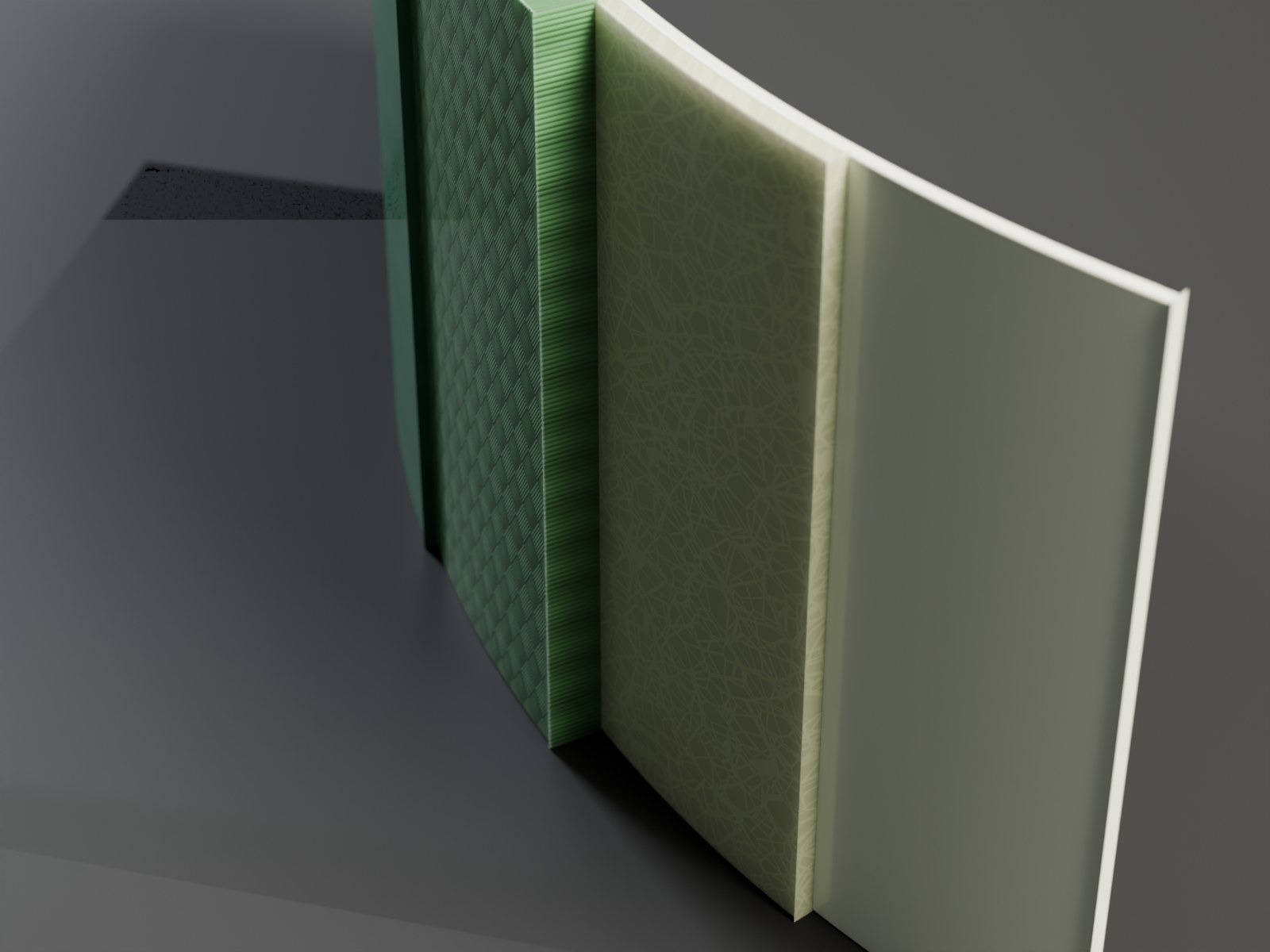
Construction
Layer by layer.
← Inside · contents
Outside · environment →
Layer 01 / 04 · Faces the contents
Inner surface
A resin-rich layer, usually reinforced with a thin surface veil. It is the first defence against chemical attack and gives a smooth, cleanable face.
- Specification
- To be confirmed
Layer 02 / 04 · Backs up the surface
Corrosion barrier
Chopped-strand reinforcement in the same chemical-resistant resin. It adds thickness so that small surface damage does not reach the structure.
- Specification
- To be confirmed
Layer 03 / 04 · Carries the load
Structural layer
Continuous glass fibre, filament-wound or hand-laid, sized to carry the pressure, loads and handling stresses. Thickness is set by design calculation, not by rule of thumb.
- Specification
- To be confirmed
Layer 04 / 04 · Faces the environment
Exterior finish
A resin topcoat that can include UV inhibitors, pigment or fire-retardant additives, depending on where the equipment sits.
- Specification
- To be confirmed
A typical FRP laminate for corrosive service. The actual layers and resins depend on the duty.
Construction options
Composite (FRP / GRP)
An all-composite build, with the resin system and laminate designed for the specific chemical duty.
Dual laminate
A thermoplastic liner backed by FRP structure. The liner handles severe chemical service, and the FRP carries the load.
Thermoplastic
Thermoplastic equipment for aggressive chemical environments where it suits the temperature and size.
Process
How it's made.
Properties
What it offers, and the conditions that come with it.
Each property is tied to the need it answers. Figures appear only once they're backed by a test report or datasheet.
-
Chemical resistance
For Storing or handling acids, alkalis, brine or effluent
Resistance depends on the resin and on the medium, concentration and temperature. Each duty is checked against resin data, not assumed.
To be confirmed -
Weight
For Transport, lifting and supporting structures
FRP is typically much lighter than steel for a comparable duty, which can simplify handling and foundations. The actual weight comes from the design.
To be confirmed -
No rust
For Coastal, marine and wet environments
FRP does not rust the way steel does, but it still needs inspection. UV exposure, temperature and mechanical damage all matter.
To be confirmed -
Formability
For Custom shapes, ducts, covers and fittings
Moulded and wound parts can be made in shapes that would be costly to fabricate in metal.
To be confirmed
Where it's used
FRP in practice.
Chemical & process
Aggressive media, temperature swings, and costly downtime if the material fails.
Marine & brine
Salt, humidity and spray that corrode unprotected steel quickly.
Water & effluent storage
Large volumes, long service expectations, and sites where field coating is hard.
Related solutions
- FRP / GRP chemical process equipment
- Dual-laminate equipment
- Thermoplastic equipment
- Marine & brine equipment
- Engineering, design & cost engineering
- Project management & partner coordination
Comparing options? Glass-lined steel → · Stainless steel →
Project inquiry
Tell us what the project needs to handle.
Share the medium, environment, size, location and timeline. Drawings or a spec sheet help. We’ll come back with questions or a recommended direction.